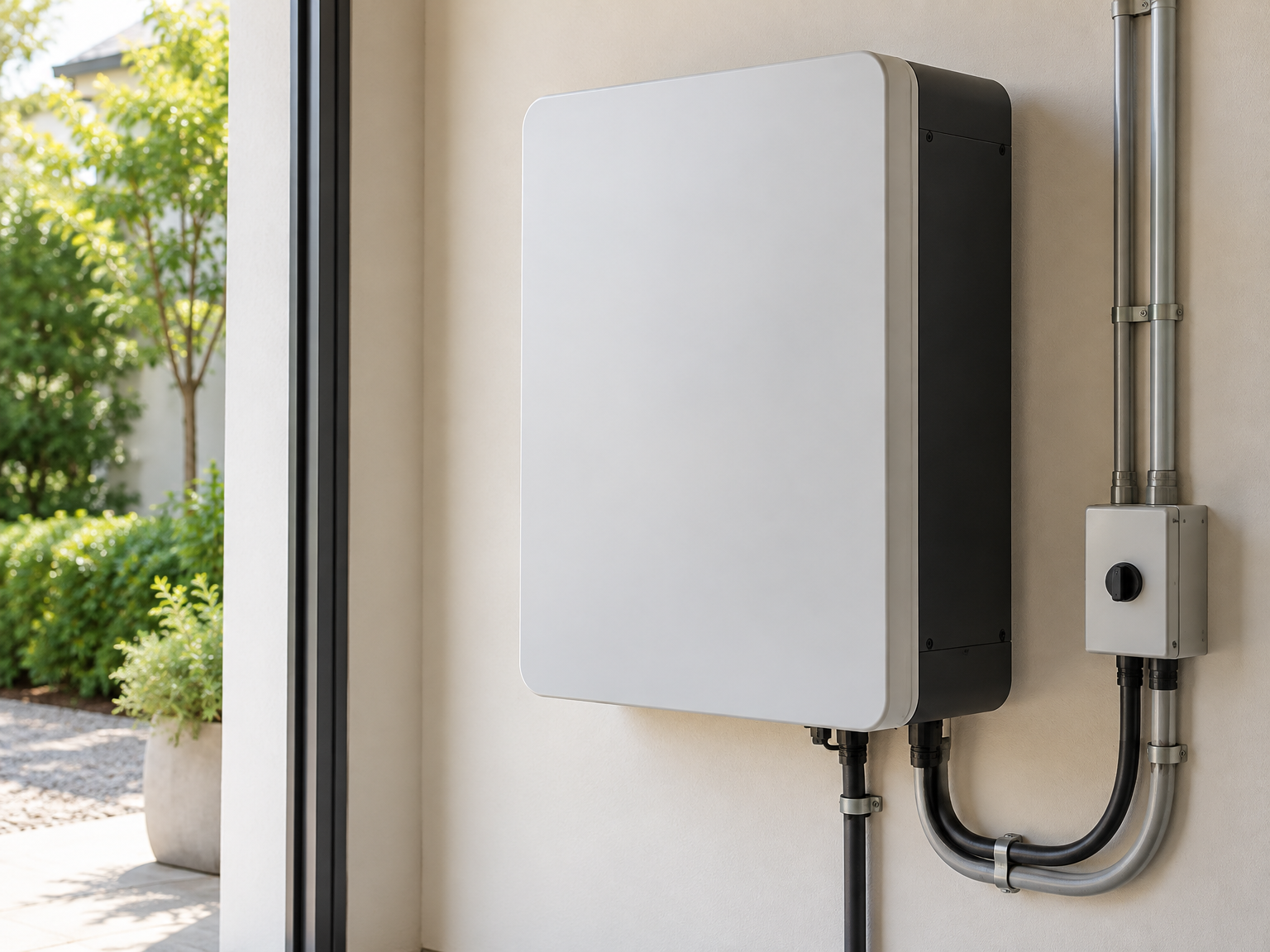
A home battery comparison involves more than choosing a capacity figure. The right questions include how much energy is available for use, how quickly it can be delivered, whether it works with the rest of the system, and what its warranty actually covers.
Nominal capacity describes the battery’s stated total energy capacity; usable capacity is the amount available for use under the manufacturer’s specifications. These figures are not necessarily identical. Compare usable capacity on a like-for-like basis, and check whether the stated value depends on operating conditions or settings.
Energy and power answer different questions. Capacity, usually expressed in kilowatt-hours, describes an amount of stored energy. Power, expressed in kilowatts, describes how quickly energy can be delivered or absorbed. A battery’s power limits can affect which loads it can support at one time, so consider both figures in relation to how you expect to use it.
Round-trip efficiency describes how much energy is returned after energy has been stored and later discharged, according to the stated measurement conditions. Also check inverter compatibility, system configuration, and whether additional equipment is required. A listed battery capacity alone does not show how the complete installation will operate.
Backup capability needs careful checking. Some systems can supply selected circuits during an outage, while backup operation may depend on compatible equipment and a particular configuration. Ask what is included, which loads can be supported, and what happens when the battery is depleted. Do not assume every battery installation provides whole-home backup.
Read warranty conditions alongside the headline term. Look for any stated limits, operating requirements, exclusions, and claim procedures. Potential savings depend on household usage, electricity tariffs, and the configuration of the full system, so generic specifications cannot establish a particular household’s financial outcome.
Leave a Reply